


Shopify has established itself as one of the most widely used e-commerce platforms globally. Since its creation in Ottawa in 2006, the SaaS solution has attracted over 2 million active merchants in 175 countries. This popularity warrants a closer look at Shopify’s advantages and disadvantages to understand if this platform truly meets the needs of e-commerce businesses.
This analysis is based on real-world tests, user feedback, and an objective evaluation of its features. We address the strengths that have contributed to Shopify’s success, as well as the practical limitations users encounter daily.
The Main Advantages of Shopify
Simple and Quick Setup
Shopify’s interface stands out for its clarity. Menus are logically organized, and options remain accessible without prior technical training. This simplicity allows for launching a functional online store in just a few hours.
The registration process requires minimal information and takes only a few minutes. The 14-day free trial allows users to test all features without financial commitment. The dashboard guides new users through a list of priority actions to develop their site.
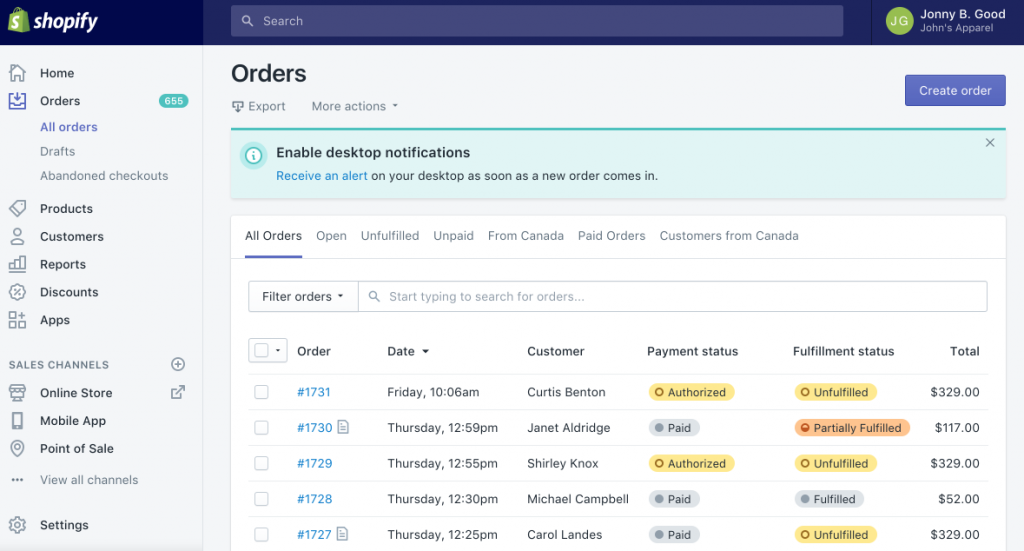
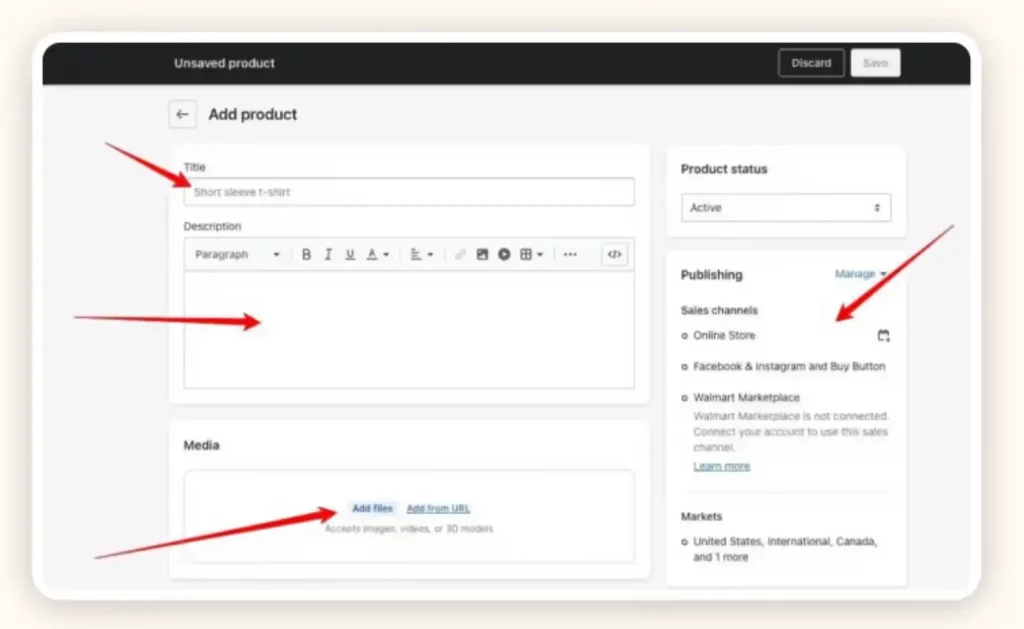
Adding products follows an intuitive process. Product sheets allow users to enter descriptions, prices, variations, stock levels, and images without requiring programming knowledge. Page creation and design customization are done via drag-and-drop.
Modern and Responsive Themes
Shopify offers a library of professional themes tailored to various business sectors. These templates automatically adjust to all screen types: desktops, tablets, and smartphones. This mobile compatibility is a major asset for SEO and user experience.
Themes allow for customization of colors, fonts, and layouts. Users with development skills can access HTML and CSS code for more advanced modifications. This flexibility satisfies both beginners and experienced developers.
The number of free themes is limited compared to paid options. Premium themes cost between $150 and $350 depending on their complexity and features.
A Feature-Rich App Store
The Shopify app ecosystem includes over 8,000 extensions. These applications cover all e-commerce needs: marketing, inventory management, customer service, logistics, accounting, and analytics.
The App Store is divided into 12 main categories with detailed subcategories. This organization facilitates the search for specific tools. Shopify suggests relevant applications based on your business profile during initial setup.

Third-party applications allow for adding functionalities not natively present in Shopify. Abandoned cart recovery, marketing automation, loyalty programs, customer reviews, and SEO tools can be integrated with a few clicks.
Powerful Multichannel Sales Tools
Shopify allows selling across multiple channels from a single interface. The platform integrates with Facebook, Instagram, Amazon, eBay, and other marketplaces. This centralization simplifies inventory and order management.
The Point of Sale (POS) system connects physical and online sales. Merchants can manage their physical store and website from the same dashboard. Inventory automatically synchronizes across all sales channels.
International sales features include automatic currency conversion, country-specific tax management, and multi-language site translation. These tools facilitate international expansion without complex technical infrastructure.
An Integrated and Secure Payment System
Shopify Payments eliminates the need for an external payment provider. This integrated solution simplifies setup and reduces transaction fees. The platform accepts over 100 payment methods, including credit cards, PayPal, Apple Pay, and Google Pay.
The checkout process is optimized to maximize conversions. Customers can complete their purchases in a few steps without being required to create an account. The sales funnel is designed to reduce cart abandonment.
Security complies with PCI DSS standards. Customer banking data is encrypted and protected. A free SSL certificate secures the entire site without technical configuration.
Robust SEO Features
Shopify integrates natural search engine optimization (SEO) tools from the basic version. Each page allows for customization of the title, meta description, and URL. These settings are easily adjusted from the editor without technical knowledge.
The platform automatically generates an XML sitemap. This file helps search engines crawl and index all site pages. Shopify themes adhere to technical best practices: semantic HTML structure, optimized loading times, and mobile compatibility.
An integrated blog allows for content creation to attract organic traffic. The article editor resembles classic word processing tools. Basic SEO features are present: Hn tag management, image optimization, and internal link creation.
24/7 Customer Support
The Shopify support team is available 24/7 via phone, chat, and email. This availability allows for quick resolution of technical issues or questions regarding platform usage.
Comprehensive documentation in French covers all aspects of Shopify. Step-by-step guides explain how to configure and use each feature. Video tutorials accompany the knowledge base articles.
The Shopify community remains very active on the official forums. Users share their experiences, solutions, and best practices. This mutual assistance effectively complements official support.
Shopify’s Disadvantages to Consider
Accumulating Monthly Costs
The monthly subscription represents a fixed cost independent of revenue. The Basic plan costs €27 per month, Shopify €79, and Advanced €289. These prices do not include transaction fees or paid applications.
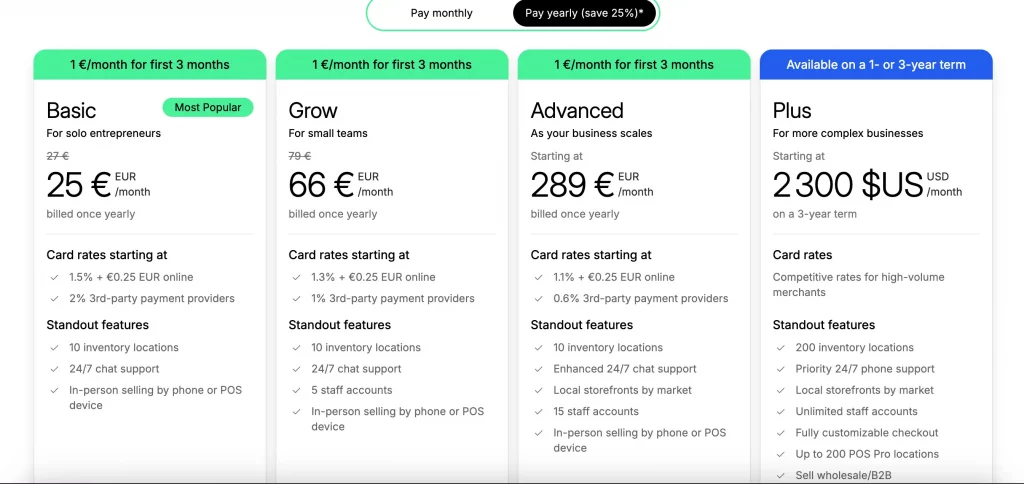
Without using Shopify Payments, commissions ranging from 2% to 0.5% apply to each sale, depending on the chosen plan. These fees are in addition to commissions from external payment providers. The total cost can quickly increase for high-volume stores.
Paid applications generally operate on a monthly subscription basis. High-performing extensions cost between $20 and $100 per month. Adding 5 to 10 applications can double Shopify’s monthly cost.
A custom domain name is an additional cost. Shopify provides a free domain ending in “.myshopify.com”, which is unprofessional. Purchasing your own domain costs approximately $14 per year via Shopify or requires external configuration.
Limited Customization Without a Developer
Modifications beyond basic options require programming skills. Shopify’s proprietary Liquid language requires specific learning. Complex changes to the site’s structure or behavior often require a developer’s intervention.
Free themes offer limited differentiation possibilities. Shopify sites using the same templates tend to look alike. Creating a unique visual identity requires purchasing a premium theme or custom development.
The page editor remains basic compared to modern builders. Pre-designed sections limit creativity. Complex custom layouts require code.
Strong Reliance on Third-Party Applications
Many standard e-commerce functionalities are not natively included. Loyalty programs, customer reviews, advanced search, or product recommendations require external applications.
This reliance increases monthly costs. Each application adds an additional subscription. The budget can quickly exceed initial forecasts.
The proliferation of applications can affect site performance. Each extension adds code and requests that slow down page loading. This issue impacts user experience and SEO.
Maintenance becomes more complex with numerous applications. Updates can create conflicts. Compatibility between extensions is not always guaranteed.
Sometimes Rigid URL and SEO Management
Shopify imposes a rigid URL structure. Product URLs must include “/products/” and collection URLs “/collections/”. This constraint reduces SEO optimization possibilities and the creation of short URLs.
301 redirects are managed manually, one by one. This limitation poses a problem during redesigns or structural changes. The lack of bulk import for redirects complicates migration from another platform.
The Shopify blog lacks advanced features. There is no category system, only tags. The editor remains basic and does not allow for creating complex content layouts.
Canonical tags and technical SEO settings offer less control than on CMS platforms like WordPress. Some advanced optimizations remain impossible without theme code modifications.
Incomplete French Translation
The Shopify interface is only partially translated into French. Certain sections, particularly the App Store and advanced settings, remain in English. This situation can complicate usage for non-French speakers.
Customer support operates primarily in English. Although a French service exists, it is less responsive than the English version. Documentation and video tutorials in French cover basic functionalities but lack depth.
Third-party applications are predominantly in English. Their configuration and use require a basic understanding of English. This language barrier can hinder the adoption of some otherwise useful tools.
Limitations for High-Volume Stores
Inventory management features become limited for large catalogs. Bulk product operations lack flexibility. Large data imports and exports can be slow.
The product variant system is limited to 3 options and 100 variants per product. These restrictions pose a problem for certain sectors, such as fashion or sports equipment, which require numerous variations.
Reports and analytics in the Basic version remain rudimentary. Advanced data and custom exports require higher-tier plans or third-party applications. This limitation complicates management for data-driven businesses.
Is Shopify right for your project?
For Whom Shopify Remains a Good Choice
Shopify is particularly suitable for entrepreneurs launching their first online store. Its ease of use allows them to focus on products and customers rather than technicalities. The 14-day free trial provides ample time to evaluate the platform.
Physical retailers looking to sell online find a complete solution in Shopify. The POS system unifies physical and digital sales. Centralized inventory management across channels simplifies operations.
Content creators and influencers can easily monetize their audience. Integration with social networks allows for direct sales from Instagram or Facebook. Dropshipping features facilitate launching without inventory management.
International brands benefit from multilingual and multi-currency tools. Shopify Plus offers enterprise features to manage multiple stores, automate processes, and personalize the customer experience.
When to Choose a Shopify Alternative
Projects requiring extensive customization should consider other options. Stores with specific needs or complex business processes may feel limited by Shopify’s structure.
E-commerce businesses sensitive to fixed monthly costs may prefer open-source solutions. WooCommerce on WordPress or PrestaShop offer more hosting flexibility and avoid mandatory monthly fees.
Sites requiring a powerful blog and strong editorial content will benefit more from WordPress with WooCommerce. Its content marketing and SEO capabilities are superior.
Companies seeking a 100% French solution with local support can turn to WiziShop or PrestaShop. These alternatives offer interfaces and support entirely in French.
Frequently Asked Questions about Shopify’s Pros and Cons
Is Shopify suitable for beginners?
Yes, Shopify remains accessible to beginners. The intuitive interface and step-by-step guides facilitate online store creation without technical skills. The free trial allows for risk-free platform testing.
What are Shopify’s main hidden costs?
Costs accumulate with paid applications, transaction fees without Shopify Payments, premium theme purchases, and potentially developer services for advanced customizations.
Can one easily migrate from Shopify to another platform?
Migration is possible but requires effort. Product data can be exported as CSV. Theme customizations and application configurations must be recreated. URLs change, requiring the implementation of redirects.
Is Shopify good for SEO?
Shopify offers a solid foundation for SEO: tag customization, automatic sitemap, mobile compatibility, and optimized loading times. Some limitations exist regarding URL structure and advanced technical control.
Are technical skills required to use Shopify?
Not for basic functionalities. Creating and managing a standard store requires no programming skills. Advanced customizations require web development knowledge and the Liquid language.
How much does a Shopify store actually cost?
The total cost includes the monthly subscription (€27 to €289), applications (€0 to €200+/month), the domain (€14/year), potentially a premium theme ($150-$350), and variable transaction fees depending on sales volume.
Conclusion: A Comprehensive Solution, But With a Cost
Shopify deserves its popularity for its ease of use and comprehensive ecosystem. The platform allows for quickly launching a professional online store without technical skills. The 24/7 customer support and active community reassure new e-commerce businesses.
Limitations emerge with accumulating monthly costs and reliance on third-party applications. Stores requiring extensive customization or specific functionalities will need to invest in custom development. The rigid URL structure and certain SEO constraints may limit some expert users.
The choice of Shopify depends on each project’s priorities. Its simplicity and speed of deployment justify the costs for many entrepreneurs. Others may prefer solutions that accommodate greater technical complexity in exchange for reduced costs and total control.
For fashion, luxury, and beauty brands seeking a professional solution with expert support, the assistance of a specialized Shopify agency like KNR can maximize the platform’s return on investment.


