

Choosing an e-commerce platform determines the success of your online store. Shopify and Salesforce Commerce Cloud represent two different approaches: one emphasizes simplicity and accessibility, the other power and customization. This guide compares these two solutions to help you make the right decision.
What is Shopify?
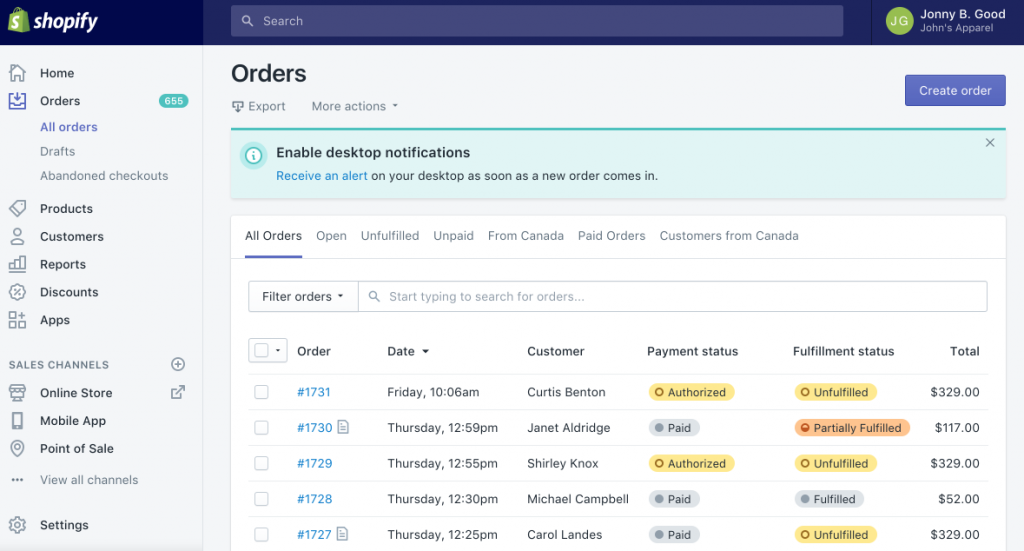
Shopify is an all-in-one e-commerce platform launched in 2006. Over 4.5 million stores worldwide use this solution. The platform hosts your site, manages payments, offers pre-designed themes, and integrates hundreds of applications.
Shopify’s approach is based on ease of use. A merchant without technical skills can create their store in a few hours. The platform handles hosting, security, updates, and PCI DSS compliance. You focus on sales, not technicalities.
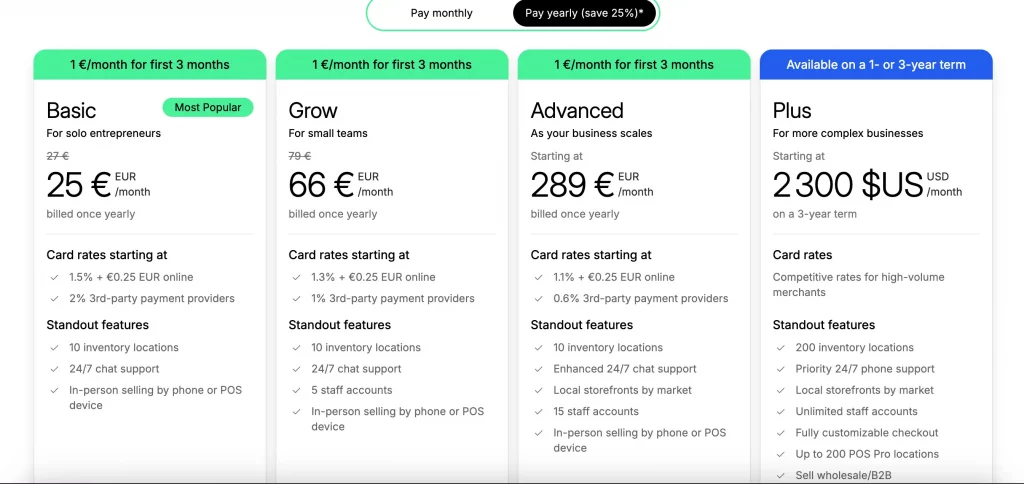
Shopify offers three main plans: Basic at €29 per month, Shopify at €79 per month, and Advanced at €289 per month. For large enterprises, Shopify Plus starts at $2,000 per month and offers advanced features such as workflow automation and priority support.
What is Salesforce Commerce Cloud?
Salesforce Commerce Cloud (formerly Demandware) is an enterprise e-commerce platform created in 2004 and acquired by Salesforce in 2016. The solution is aimed at large brands that generate over $25 million in annual revenue.
Commerce Cloud comes in two versions: B2C Commerce for direct-to-consumer sales, and B2B Commerce for business-to-business transactions. The platform integrates natively with the Salesforce ecosystem, including Marketing Cloud, Service Cloud, and Sales Cloud.
Commerce Cloud’s architecture offers significant flexibility. Developers can customize every aspect of the store using robust APIs and a proprietary language called ISML. This flexibility comes at a price: technical complexity and high costs.
Salesforce Commerce Cloud pricing starts at around $3,000 per month but can easily reach $10,000 to $30,000 monthly depending on requirements. Billing is based on a percentage of Gross Merchandise Volume (GMV), typically between 1% and 3%.
Comparison of Core Features
Both platforms handle essential e-commerce functions, but with different approaches. Shopify prioritizes simplicity, while Commerce Cloud offers more control.
Product Management
Shopify allows you to create product pages with unlimited variants, media (photos, videos), rich descriptions, and SEO metadata. The interface remains intuitive even with thousands of SKUs. Collections automatically organize products according to rules you define.
Commerce Cloud offers sophisticated product catalogs with complex relationships between items. You can manage multiple catalogs for different markets, create dynamic bundles, and apply advanced merchandising rules. This complexity suits brands with extensive product ranges.
Cart and Checkout
Shopify’s checkout funnel converts efficiently. Shopify Payments integrates payment processing without additional transaction fees. The platform accepts over 100 payment gateways depending on the country. The purchase process is mobile-optimized and fast.
Commerce Cloud offers total control over the customer journey. You can customize each step, implement complex business rules, and create tailored experiences. Developers build checkout funnels tailored to the specific needs of the business.
Inventory management
Shopify tracks inventory in real-time across all sales channels. The system alerts when a product is out of stock and allows managing multiple warehouses. The functions remain basic for complex logistics operations.
Commerce Cloud integrates with Warehouse Management Systems (WMS) and ERP software. Large enterprises can orchestrate multi-site logistics operations with advanced allocation rules. This integration requires custom development.
Performance and Scalability
The ability to handle traffic and sales volumes varies significantly between the two platforms.
Shopify hosts over 4.5 million stores on its infrastructure. The platform handles traffic peaks without special configuration. During Black Friday 2023, Shopify processed $4.1 billion in sales with 99.99% uptime. The multi-tenant architecture automatically manages scaling.
Shopify Plus adds dedicated servers for large accounts. Businesses that generate millions of visits per day can rely on the platform’s stability. Shopify’s theoretical limits are rarely reached by merchants.
Commerce Cloud uses an elastic cloud architecture that adapts to demand. Large brands like Adidas, Puma, and L’Oréal rely on this infrastructure for their global operations. The platform manages catalogs of tens of thousands of products and millions of daily transactions.
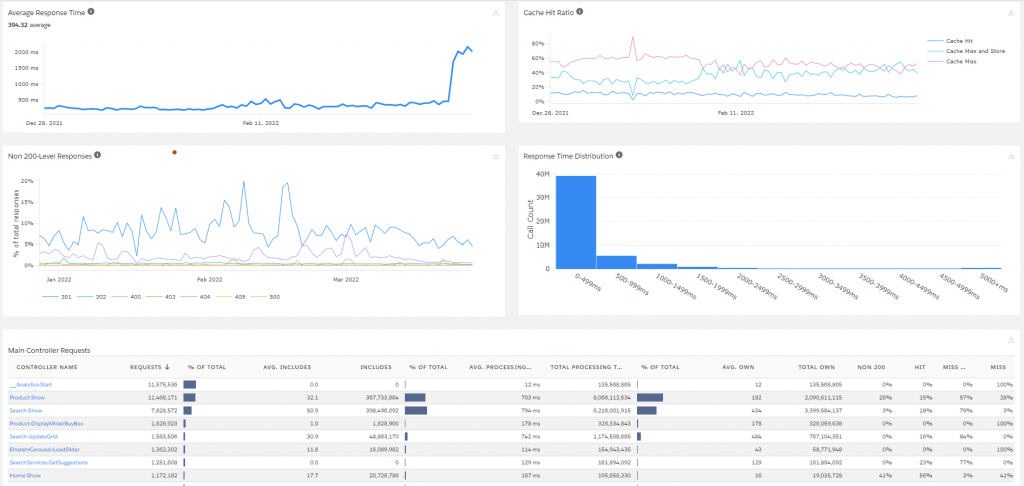
Commerce Cloud’s performance depends on the quality of the code and the architecture implemented. A poorly optimized store can be slow despite the platform’s power. Technical teams must continuously monitor and optimize.
Ease of Use and Learning Curve
The time required to master a platform directly influences your teams’ productivity.
Admin Interface
Shopify offers a clear and modern interface accessible from any browser. Menus are logical, and common actions require few clicks. A new seller can manage orders and update products after a few hours of training. The mobile application allows managing the store on the go.
Commerce Cloud Business Manager presents a functional but busy interface. The numerous options and settings can confuse non-technical users. Teams need several weeks to become familiar with all modules. The interface reflects the complexity of the available features.
Customization
Shopify uses Liquid, a simple templating language created by Shopify. Web developers can modify themes after a few days of learning. CSS and HTML adjustments remain accessible. For complex functionalities, applications often replace custom development.
Commerce Cloud requires skills in ISML (proprietary language), JavaScript, and the OCAPI API. Developers must undergo specific Salesforce training. The Salesforce Commerce Cloud Developer certification takes several months to obtain. Qualified profiles are rare and expensive in the market.
App and Integration Ecosystem
Applications extend the native functionalities of each platform.
Shopify App Store
The Shopify App Store offers over 8,000 applications covering all needs: marketing, logistics, accounting, customer service, etc. Most applications install with one click and work immediately. Prices range from free to several hundred euros per month.
Popular applications like Klaviyo (email marketing), Judge.me (customer reviews), or Yotpo (UGC) have tens of thousands of users. This popularity ensures extensive documentation and responsive support. The Shopify ecosystem is the most developed in the e-commerce market.
The downside: multiplying applications increases monthly costs and can slow down your store. Each application adds JavaScript code that impacts performance. It is necessary to choose wisely and limit the number of installed extensions.
Salesforce AppExchange
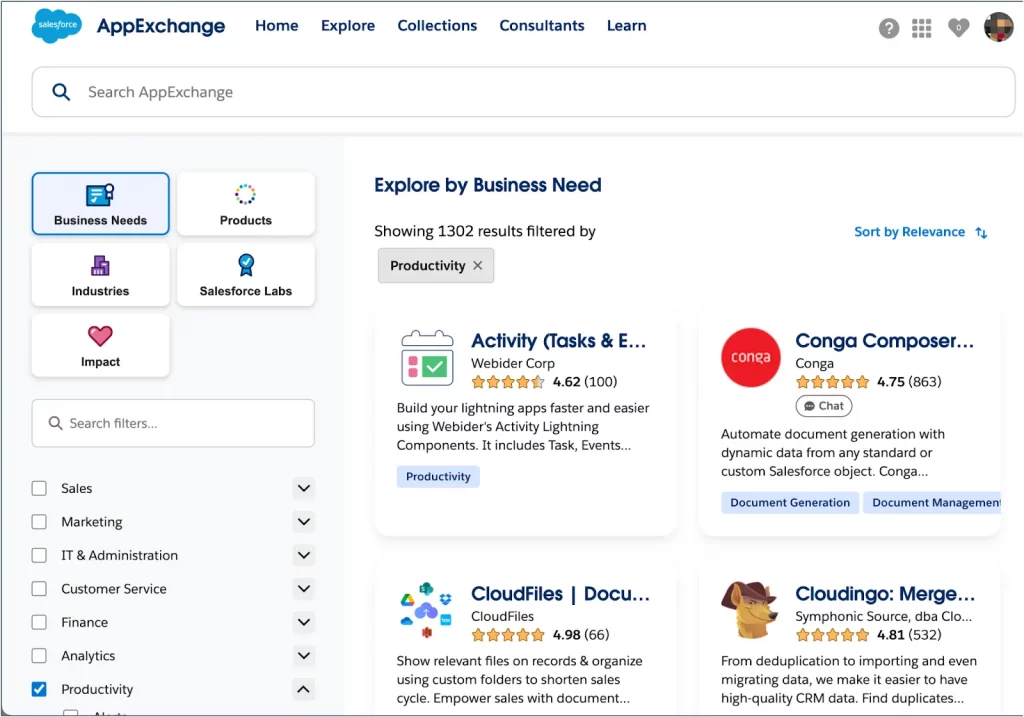
AppExchange offers integrations for Commerce Cloud, but the offering is more limited than on Shopify. The solutions are enterprise-oriented with corresponding prices. Native integrations with the Salesforce ecosystem are the main advantage.
Marketing Cloud, Service Cloud, Einstein AI, and other Salesforce products connect directly to Commerce Cloud. This integration creates a powerful unified customer view. Businesses already using Salesforce benefit from significant synergy.
Integrations with third-party tools often require custom development. Commerce Cloud’s APIs allow connecting any system, but at the cost of significant technical effort.
Multichannel and Internationalization
Selling across multiple channels and geographical markets requires specific functionalities.
Multichannel Sales
Shopify connects your store to Facebook, Instagram, TikTok, Amazon, eBay, and physical points of sale via Shopify POS. A single inventory automatically synchronizes across all channels. This omnichannel approach simplifies management for teams.
Commerce Cloud also handles multichannel but requires more configuration. Integration with marketplaces and social networks is done via connectors or specific developments. The approach is more flexible but demands more resources.
Internationalization
Shopify Markets facilitates international sales. The platform manages multiple currencies, languages, and tax zones. You can adapt prices by market, configure local carriers, and translate your store. The functionalities remain limited for very specific needs.
Commerce Cloud excels in international capabilities. The platform manages multiple sites with different catalogs, prices, promotions, and content per market. Large brands can orchestrate global operations while respecting local specificities. This flexibility requires significant resources for configuration and maintenance.
SEO and Marketing
Search engine optimization and marketing capabilities influence your ability to attract and convert visitors.
SEO Capabilities
Shopify integrates SEO fundamentals: clean URLs, customizable title and meta tags, automatic structured data, XML sitemap, and robots.txt file. The platform generates fast pages, an important ranking factor. Modern themes adhere to technical best practices.
Limitations appear in advanced functions: rigid URL structure, basic redirection management, inability to modify certain technical elements. For a complex showcase site, these constraints can be problematic. For an e-commerce store, they are generally sufficient.
Commerce Cloud offers total control over all technical aspects of SEO. Developers can implement any optimization, create custom URL structures, and finely manage redirections. This freedom benefits brands that invest in SEO.
Integrated Marketing Tools
Shopify offers basic marketing tools: email campaigns, simple automations, promo codes, loyalty programs via applications. Shopify Email allows sending campaigns directly from the interface. The functions remain limited compared to specialized tools.
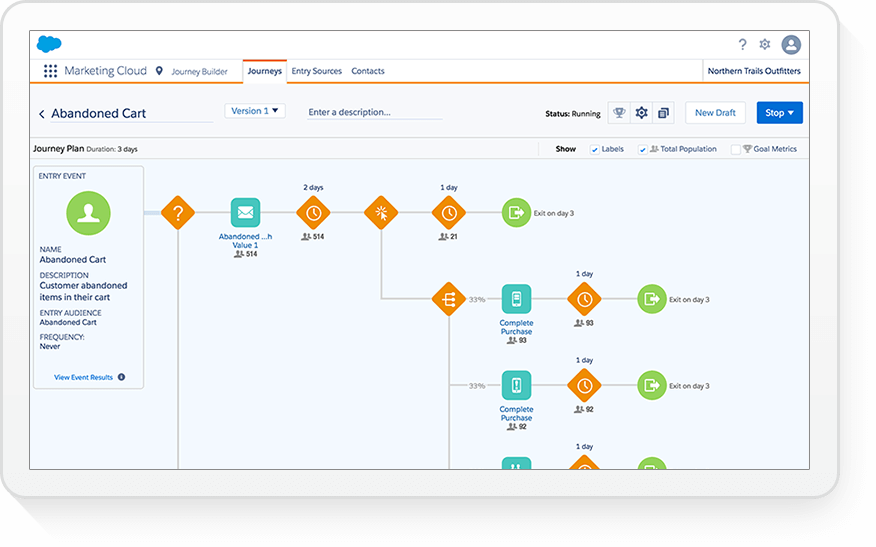
Commerce Cloud integrates natively with Marketing Cloud, Salesforce’s marketing automation platform. This connection enables sophisticated marketing scenarios based on behavioral data. Marketing teams can create personalized customer journeys with a high level of granularity.
Total Cost of Ownership
The price of an e-commerce platform goes beyond the monthly subscription.
Shopify Costs
The Shopify subscription starts at €29 per month for a Basic plan (€25 with an annual subscription), sufficient to get started. Intermediate plans (€79 and €289) reduce transaction fees and add features. Shopify Plus costs a minimum of $2,000 per month, negotiable based on volume.
Transaction fees apply if you do not use Shopify Payments: 2% on Basic, 1% on Shopify, 0.5% on Advanced. With Shopify Payments, only gateway fees apply (approximately 1.9% + €0.30 per transaction in Europe).
Applications add between €0 and €1,000 per month depending on your needs. An average store spends approximately €200 to €500 monthly on applications. Custom theme development costs between €5,000 and €30,000 depending on complexity.
Realistic total budget for a Shopify store: €10,000 to €50,000 for initial setup, then €300 to €3,000 per month depending on size and needs. These figures remain accessible for SMEs.
Salesforce Commerce Cloud Costs
Commerce Cloud charges a percentage of Gross Merchandise Volume (GMV), generally between 1% and 3%. A store generating €10 million per year pays between €100,000 and €300,000 annually in license fees. Small volumes are not accepted by Salesforce.
Initial implementation costs between €200,000 and €1 million depending on complexity. Certified Salesforce integrators charge between €800 and €1,500 per day. The project generally takes 6 to 18 months.
Maintenance and evolutions require a dedicated technical team or an outsourced partner. Annual budget: €50,000 to €300,000 depending on activity. As Salesforce skills are rare, salaries are high.
Total budget for Commerce Cloud: €500,000 to €2 million in the first year, then a minimum of €200,000 to €500,000 annually. These amounts are suitable for large enterprises that generate tens of millions in revenue.
Support and Resources
The quality of support influences your ability to resolve issues quickly.
Shopify offers email, chat, and phone support 24/7. The online documentation is comprehensive and covers all topics. The Shopify community has millions of members who share their experiences. Forums and Facebook groups are full of practical advice.
Shopify Plus includes a dedicated account manager (Launch Manager then Merchant Success Manager) and priority support. Response times are fast, usually within an hour. The quality of Shopify support is recognized in the industry.
Commerce Cloud offers enterprise support with guaranteed Service Level Agreements (SLAs). Standard support responds within 24 to 48 hours. Premium support offers response times within 2 to 4 hours depending on criticality. An account manager assists clients.
Salesforce documentation is exhaustive but dense. Developers must navigate hundreds of pages to find the desired information. The Commerce Cloud community is more limited than Shopify’s. Resources in French are rare.
Security and Compliance
Customer data protection and regulatory compliance are essential.
Shopify is PCI DSS Level 1 certified, the highest level of security for payment processing. The platform automatically manages SSL certificates, backups, and security updates. Data is hosted in secure data centers.
GDPR compliance is integrated into Shopify. Consent management, data export, and deletion functions are natively available. Shopify facilitates compliance without additional development.
Commerce Cloud also adheres to the strictest security standards with PCI DSS Level 1 certification. The Salesforce infrastructure meets the requirements of large enterprises in terms of security and availability.
Regulatory compliance (GDPR, CCPA, etc.) requires specific configurations and developments on Commerce Cloud. Teams must implement mechanisms for data consent, access, and deletion. This technical burden adds to the project.
Use Cases: Who Should Choose Shopify?
Shopify is suitable for businesses that prioritize speed to market and ease of use.
Startups and SMEs find in Shopify a complete solution to launch their e-commerce activity quickly. The entry cost is low, and the platform evolves with the company’s growth. Non-technical teams can manage the store daily.
Brands generating up to €50 million in annual revenue operate efficiently on Shopify Plus. Beyond that, some companies migrate to more complex solutions, but many remain on Shopify for its simplicity and reliability.
DTC (Direct-to-Consumer) brands that primarily sell online appreciate Shopify’s all-in-one approach. The platform integrates all the necessary tools to sell on its website, social media, and marketplaces. This consistency simplifies operations.
Businesses looking to avoid technical complexities opt for Shopify. There’s no need for an in-house development team, no infrastructure management, and no heavy maintenance. You can focus on your core business: selling your products.
Use Cases: Who Should Choose Salesforce Commerce Cloud?
Commerce Cloud is designed for large enterprises with complex requirements and significant budgets.
Brands generating over 50 million euros in annual revenue find the necessary power in Commerce Cloud. The platform handles global operations with thousands of products and millions of transactions. This scale often surpasses the capabilities of simpler solutions.
Businesses already utilizing the Salesforce ecosystem benefit from native integration across their tools. The unified customer view spanning Commerce Cloud, Marketing Cloud, Service Cloud, and Sales Cloud delivers significant value. This synergy justifies the investment.
Brands with complex business processes require the flexibility of Commerce Cloud. Sophisticated pricing rules, multiple approval workflows, and complex catalog management: the platform adapts to these specific needs through its extensive customization capabilities.
B2B businesses with long sales cycles and complex customer relationships opt for Commerce Cloud B2B. The platform manages recurring orders, customer-specific catalogs, hierarchical approvals, and tailored commercial terms.
Migration and Platform Change
Transitioning from one platform to another represents a significant project that requires careful planning.
Migrating to Shopify
Migration to Shopify from WooCommerce, PrestaShop, Magento, or Commerce Cloud is facilitated by specialized tools and partners. Product, customer, and order data can be transferred using applications like LitExtension or Cart2Cart. URLs must be redirected to preserve SEO.
The migration project typically takes 2 to 4 months, depending on its complexity. The steps include: auditing the existing system, theme selection and customization, data import, application configuration, testing, and go-live. Support from a Shopify agency helps secure the project.
Shopify’s limitations may necessitate compromises. Some custom functionalities will need to be simplified or replaced by applications. This standardization is often beneficial, as it reduces complexity and facilitates maintenance.
Migrating to Commerce Cloud
Migration to Commerce Cloud is a substantial project, typically taking 6 to 18 months. Implementation requires a certified Salesforce integrator and a client-side project team. Costs are high, usually ranging from 200,000 to 1 million euros.
The process includes: needs analysis, solution architecture, custom development, integrations with existing systems, data migration, testing, and deployment. Change management is crucial, as teams must fully adopt a complex platform.
This migration is rarely justified for a business performing well on another platform. Commerce Cloud is suitable for major brand launches or the re-platforming of legacy architectures. The return on investment must be clearly established.
Comparative Table: Shopify vs. Salesforce Commerce Cloud
| Criteria | Shopify / Shopify Plus | Salesforce Commerce Cloud |
|---|---|---|
| Target Company Size | SMEs to Large Enterprises (up to €100M revenue) | Large Enterprises (> $25M minimum revenue) |
| Monthly Cost | €29 to $2,000 depending on the plan | $3,000 to $30,000 (1-3% of GMV) |
| Setup Cost | €5,000 to €50,000 | €200,000 to €1,000,000+ |
| Go-Live Timeframe | 1 to 3 months | 6 to 18 months |
| Ease of Use | Very easy, intuitive interface | Complex, training required |
| Customization | Limited, via themes and applications | Unlimited, custom development |
| Required Skills | None to basic | Certified Salesforce Developers |
| Maintenance | Managed by Shopify | Internal team or partner required |
| Scalability | Excellent up to €100M+ | Unlimited for global enterprises |
| Applications | 8,000+ applications | Limited ecosystem, custom integrations |
| Support | 24/7, extensive documentation | Enterprise support with SLA |
| SEO | Good fundamentals, advanced limitations | Total control, advanced optimizations |
| Multichannel | Integrated (social media, marketplaces) | Possible via custom development |
| International | Shopify Markets, simplified features | Advanced multi-site management |
| B2B | Basic features on Shopify Plus | Dedicated and comprehensive B2B solution |
Frequently asked questions
Shopify or Salesforce Commerce Cloud for a Startup?
Shopify is well-suited for a startup. Entry costs are low (minimum €29/month), the platform is easy to use, and you can be online within a few weeks. Commerce Cloud requires a minimum budget of €500,000 in the first year, which is rarely justifiable for a new business.
Can You Migrate from Shopify to Salesforce Commerce Cloud?
Yes, but the migration is complex and costly. It is justified when your growth surpasses Shopify’s capabilities or when you require advanced B2B functionalities. The project takes 6 to 18 months and costs between 200,000 and 1 million euros. Businesses that reach this milestone typically generate over 50 million euros in revenue.
Which Platform is Better for SEO?
Shopify offers a solid SEO foundation that is sufficient for most e-commerce stores. Commerce Cloud provides total control and advanced optimizations but requires skilled developers. In practice, content quality and SEO strategy are more important than the platform choice itself.
Shopify Plus or Salesforce Commerce Cloud for a Luxury Brand?
Both platforms are utilized by prestigious luxury brands. Shopify Plus is suitable if you prioritize speed, simplicity, and controlled costs. Commerce Cloud is preferable if you have very specific needs, already use the Salesforce ecosystem, or generate over 100 million euros. Brands like Gymshark successfully use Shopify Plus, while others like Adidas are on Commerce Cloud.
Are Transaction Fees Lower on Salesforce Commerce Cloud?
No, Commerce Cloud generally charges 1% to 3% of gross revenue, in addition to payment gateway fees. With Shopify Payments on Shopify, you only pay gateway fees (approximately 1.9% + €0.30). Without Shopify Payments, an additional 0.5% to 2% transaction fee applies, depending on your plan.
Which Platform Offers the Best Mobile Experience?
Shopify automatically optimizes themes for mobile. Shopify stores are fast and responsive without effort. On Commerce Cloud, the quality of the mobile experience depends on the quality of development. A well-designed Commerce Cloud store can offer an exceptional experience, but this requires significant resources and expertise.
Do I Need a Technical Team to Manage Shopify?
No, Shopify is designed to be managed by non-technical users. Common tasks (adding products, managing orders, creating promotions) are performed through a simple interface. For advanced theme customizations or specific integrations, you will need a developer, but this is not required for daily operations.
Is Commerce Cloud Suitable for B2B?
Yes, Salesforce offers Commerce Cloud B2B, specifically designed for business-to-business transactions. The solution manages personalized catalogs, approval workflows, recurring orders, and complex commercial terms. Shopify Plus has also offered B2B features since 2022, but they are less advanced than those of Commerce Cloud.
Verdict: Which Platform to Choose?
The choice between Shopify and Salesforce Commerce Cloud depends on your specific situation, not on the absolute superiority of one platform over the other.
Choose Shopify if you want to launch quickly, if you have a limited budget (less than €100,000 for the initial project), and/or if you do not have an in-house technical team. Shopify combines simplicity, reliability, and controlled costs. The platform successfully powers thousands of businesses of all sizes.
Opt for Salesforce Commerce Cloud if you have complex business processes requiring extensive customization, if you already utilize the Salesforce ecosystem, or if your budget for a project ranges from €500,000 to €2 million.
Most businesses reading this guide should opt for Shopify. Only a minority genuinely requires the complexity and power of Commerce Cloud. If you are hesitant, start with Shopify; you can always migrate later if your growth warrants it.
At KNR, we support fashion, luxury, and beauty brands on Shopify and Shopify Plus. Our expertise enables us to create high-performing stores that convert, while respecting each brand’s identity. If you are considering an e-commerce project, we can help you choose the platform best suited to your needs and implement it successfully, as well as perform a successful migration from Salesforce Commerce Cloud to Shopify.


